Category: Expert Tips

  • DIY Gutter Cleaning Guide to Clean Your Gutters Safely

    DIY Gutter Cleaning Guide to Clean Your Gutters Safely

    Keeping your gutters clean is an important part of home maintenance. When gutters become clogged with leaves, moss and debris, water can no longer flow away from your home properly. Over time, this can lead to blockages, leaks and potentially expensive repairs.

    By cleaning your gutters regularly, you help protect your home from damp, water damage and even mould. A well-maintained gutter system allows rainwater to drain away efficiently and keeps your property in good condition.

    Below are some practical tips on how to clean your gutters safely and effectively, along with advice on what to do if your downpipes become blocked.

    Why gutter cleaning matters

    Climbing a ladder to clear out gutters might not be the most enjoyable job, but it’s far better than dealing with the consequences of neglected guttering.

    When gutters are clear, rainwater can flow freely through the system and down the pipes. If debris builds up, water may overflow or back up under roof tiles, which can lead to damage over time.

    Blocked gutters also become heavier as they collect moss, leaves and standing water. This added weight puts stress on the gutter brackets and joints, especially at weak points such as corners and connectors. Over time, this strain can shorten the life of your guttering system.

    How often should gutters be cleaned?

    As a general rule, gutters should be cleaned once or twice a year.
    However, the exact frequency depends on the environment around your home. Properties surrounded by trees or those with moss on the roof will usually need more frequent cleaning because debris accumulates faster.

    Some homes in open areas may be able to go longer between cleans, but it’s still wise to check gutters regularly to prevent problems from developing.

    The best way to clean gutters

    If you feel comfortable using a ladder and it is placed securely on stable ground, cleaning gutters yourself can be straightforward. Ideally, have someone nearby to hold the ladder and provide extra stability while you work.

    It’s important not to lean too far to reach debris. Instead, move the ladder along as you progress.

    Cleaning gutters by hand

    Many professionals still prefer clearing gutters manually. Tools such as extension poles with gutter attachments can help you reach further along the gutter while maintaining balance.

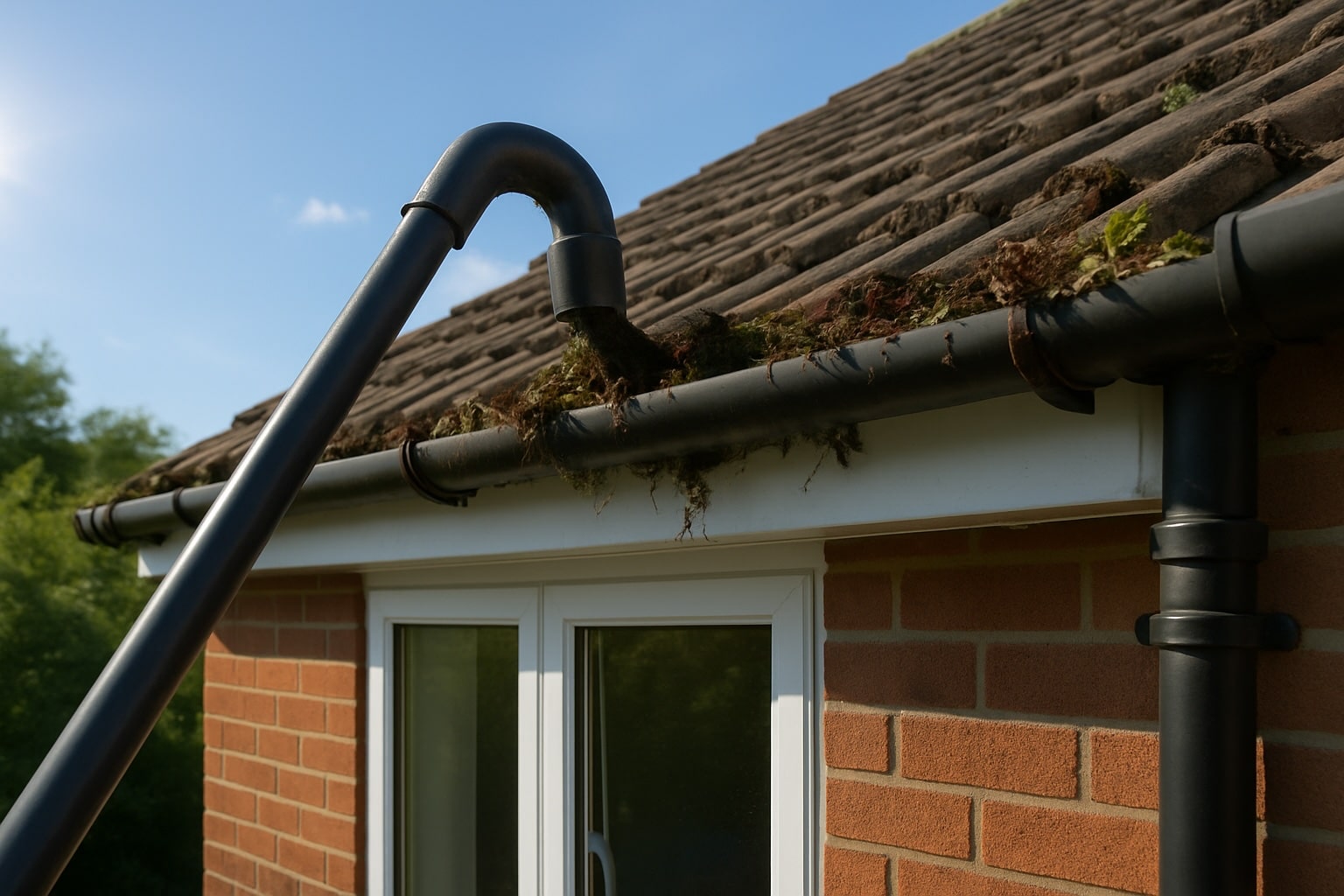
    If working from a ladder isn’t practical, gutter vacuum systems can be used from the ground. These machines are effective for removing loose debris, although they may struggle to clear material that becomes trapped in corners or within the bends of downpipes.

    Another simple method is to wear gardening gloves and use a small trowel to scoop debris into a bucket. After removing the main build-up, running a hose through the gutter will help wash away any remaining dirt and confirm that water flows freely.

    Can you use a pressure washer on gutters?

    Many pressure washer manufacturers, including Karcher, advise against using a pressure washer while standing on a ladder due to safety concerns. The force of the water can also potentially damage guttering or roofing materials if used incorrectly.

    A safer alternative is to use specialised gutter cleaning attachments designed for pressure washers. These attachments allow you to work from ground level while directing water into the gutter.
    Even then, pressure washing can be messy. Gutters are often full of leaves and moss, and blasting them with high-pressure water can send debris everywhere, making the job harder rather than easier.

    What if your downpipes are blocked?

    When cleaning gutters, it’s always a good idea to check the downpipes at the same time.

    If a blockage occurs further down the pipe or below ground level, it may require professional drainage equipment to resolve properly. However, smaller obstructions can sometimes be cleared using a drain cleaning hose attached to a pressure washer.

    If the blockage is severe, the gutters are heavily clogged it is more effective to clean the gutters by hand rather than from the ground using pressure washer attachments.

  • Is Window Cleaning a Slip-hazard in Sub-zero Temperatures?

    Is Window Cleaning a Slip-hazard in Sub-zero Temperatures?

    During the winter months, especially when temperatures drop below zero, people wonder whether window cleaning is still safe. One of the most common concerns we hear from homeowners is about ice forming on the ground outside the house after the windows have been cleaned.

    It’s a sensible question — and the honest answer is that it can be a safety risk if it’s not handled properly.

    Window cleaning involves water, and when it’s freezing outside, any water that lands on a driveway, patio, path or pavement can quickly turn to ice. Even a thin, almost invisible layer of ice can be slippery enough to cause a fall. That’s obviously something nobody wants, whether it’s a homeowner, a visitor, or the window cleaner himself.

    That said, window cleaning doesn’t automatically become unsafe just because it’s cold. The key difference is how the job is finished.

    A professional window cleaner should always think about what happens after the cleaning is done. In freezing conditions, that means using ice-melting grit on any areas where water may have run off. Applying grit greatly reduces the chance of ice forming and makes surfaces safer to walk on.

    If grit isn’t used, then yes — cleaning windows in sub-zero temperatures can leave behind a real slip hazard. This is why it’s so important to choose a window cleaner who takes winter safety seriously rather than just rushing through jobs.

    As a homeowner, it’s reasonable to ask your window cleaner about this. If the temperature is below freezing, simply asking whether they use grit after cleaning can give you peace of mind. Any responsible professional will understand the concern and be happy to explain what precautions they take.

    There may also be rare occasions, such as during heavy snow or prolonged hard frost, when postponing the clean is the safest option. Again, a good window cleaner will always put safety first and won’t take unnecessary risks.

    In short, window cleaning in freezing weather isn’t unsafe by default — but it does require extra care. If water is allowed to freeze on outdoor surfaces, it becomes a risk. When ice-melting grit is used properly, that risk is greatly reduced.

    If you’re ever unsure, just ask one of our professional window cleaners in Swindon who always work with your safety in mind.

  • How Much Should You Pay a Window Cleaner?

    How Much Should You Pay a Window Cleaner?

    If you’ve been looking for a window cleaner recently, you’ve probably seen prices advertised per month. On the surface, that sounds straightforward — and usually quite cheap.

    But here’s the thing many homeowners don’t realise: paying monthly doesn’t always mean your windows are cleaned monthly.

    In fact, a lot of window cleaners collect a fixed monthly payment while visiting every six or eight weeks. There’s nothing wrong with spreading payments out, but it can easily create confusion. Over time, customers may assume they’re getting more cleans than they actually are.

    The result is that a price that looks low on paper can work out much higher once you look at how often the cleaner actually turns up.

    This isn’t always done with bad intentions. Monthly payments are convenient, and they help cleaning companies keep things predictable throughout the year. The issue is simply clarity. When price and frequency aren’t clearly linked, it’s easy for homeowners to misunderstand what they’re paying for.

    That’s why it’s always worth asking one simple question before choosing a window cleaner: how often will you actually be cleaning my windows?

    Once you know that, it becomes much easier to judge whether a price is fair — and to compare different quotes properly.

    As a rough guide, most typical homes in Swindon pay somewhere in the £20–£30 range per visit for regular exterior window cleaning. Whether you pay monthly or per clean matters less than knowing exactly what you’re getting.

    At Window Hero, we believe pricing should be clear, simple, and upfront — no confusion, no assumptions. If you ever want a straightforward quote or just have a question about how pricing works, feel free to get in touch with one of our window cleaners in Swindon.

  • Are Window Cleaning Robots Worth It? A Practical Guide For Apartments & Homes With Skylights

    Are Window Cleaning Robots Worth It? A Practical Guide For Apartments & Homes With Skylights

    If you live in an apartment or a multi-storey home, you’ll know how quickly windows lose their shine. Rain, dust, pollution, and everyday grime can leave glass looking dull far sooner than expected. While clean windows make a huge difference to how a home feels, keeping them that way isn’t always straightforward. Many homeowners and apartment residents now find themselves asking the same question: is a window cleaning robot worth buying, or is it still better to hire a professional window cleaner?

    Window cleaning robots have become increasingly popular as smart home technology improves. Designed to attach directly to glass and move across it automatically, they promise clean windows without ladders, awkward stretching, or waiting for appointments. For people with hard-to-reach windows, they offer a completely different way of maintaining clear glass throughout the year.

    One of the biggest advantages of a window cleaning robot is how well it handles areas that are difficult to access. Exterior apartment windows, upper-floor glazing, and large fixed panes can be challenging to clean manually. Robots use suction to stay attached to the surface while following programmed cleaning paths, allowing you to maintain windows that would otherwise be neglected. This also makes them particularly useful for skylights and roof windows. In three-storey houses, skylights are often left dirty simply because reaching them requires specialist equipment or roof access. A window cleaning robot can usually clean these surfaces from inside the home, making regular upkeep far more practical.

    Convenience is another major reason people consider buying one. Instead of arranging visits or working around availability, you can run the robot whenever you notice marks or buildup. This flexibility suits busy households, families, and anyone who prefers handling maintenance on their own schedule. Over time, the financial side can also make sense. Most window cleaning robots cost between £150 and £500 upfront, and while that feels like a significant purchase initially, it can compare favourably with repeated professional cleaning visits over several years.

    However, robots do have limitations. The upfront cost is higher than traditional cleaning tools, and there can be a small learning curve when first setting one up. Some models require safety cords, specific pads, or recommended cleaning solutions for best performance. While they are effective at maintaining clean windows, they don’t always achieve the perfectly polished, streak-free finish that experienced professional cleaners deliver.

    Professional window cleaners still offer clear advantages. With the right equipment and technique, they can produce consistently excellent results both inside and outside. They also work quickly, often completing a full clean in less time than a robot would take on multiple windows. For many homeowners, the biggest benefit is simplicity — once booked, the job is completely handled for you.

    The main drawback is the ongoing cost. Professional window cleaning is a recurring expense, and prices can increase when access is complicated or specialised equipment is required. In some buildings or properties, arranging regular cleaning can also be less flexible than many people would like.

    So which option is best? If professional cleaning is easy to arrange and fits comfortably within your budget, occasional visits may remain the most straightforward solution. But for apartment residents, higher-floor living, or homes with skylights and difficult glazing, a window cleaning robot can be a practical long-term investment. It gives you control over when and how often your windows are cleaned without relying on availability.

    For those who prioritise a flawless finish, professionals still have the edge. Yet for everyday maintenance, convenience, and reducing the need for frequent appointments, robots perform surprisingly well.

    Ultimately, a window cleaning robot doesn’t have to replace professional cleaning entirely. Many homeowners find the best approach is using a robot for regular upkeep while arranging occasional deep cleans when needed. If you’ve ever looked through cloudy glass and wished cleaning was easier, a window cleaning robot may be one of the most useful additions you can make to your home.

  • DIY vs. Professional Window Cleaning: Costs, Risks, and Results Side-by-Side [2025 updated]

    DIY vs. Professional Window Cleaning: Costs, Risks, and Results Side-by-Side [2025 updated]

    Clean windows are satisfying. Whether you do it yourself or hire a professional window cleaning company, clean, sparkling windows can completely change how your home or office feels. Sunlight pours in more brightly, your view is clearer, and the whole space seems much fresher. But when it’s time to tackle those panes, you face a choice: grab a squeegee yourself or hire a pro.

    Below is a clear, honest comparison of the two options so you can decide what’s right for your budget, schedule, and comfort level.

    DIY Window Cleaning

    Equipment & Supplies

    • Essentials: bucket, quality squeegee, squeegee pole, microfibre cloths, and a mild cleaning solution. You can buy a complete kit like this one.
    • Approximate cost: £170 upfront for reusable tools.
    • Optional upgrades: extension poles or ladders for upper stories.

    Time & Effort

    Cleaning the windows of an average single-story home typically takes 2 hours for a beginner, depending on size and number of windows.

    Advantages

    • Low ongoing cost: After the initial purchase, you only need inexpensive cleaning solution.
    • Full control: Choose your preferred products and clean on your own schedule.
    • Satisfaction factor: You will enjoy the results, guaranteed!

    Drawbacks & Risks

    • Safety concerns: Ladders and high windows carry fall risks.
    • Variable results: Without practice, streaks and water spots are common.

    Professional Window Cleaning

    What’s Included

    Professional crews arrive with commercial-grade squeegees, purified water systems, and safety gear. Many services also clean window sills and frames.

    Typical Costs

    • Residential: around £20 for a two bedroom house to £40 for a 5 bedroom house, in the South of England such as Swindon.
    • Commercial: usually priced by square footage or cleaning frequency.

    Advantages

    • Superior finish: Professionals have the technique and equipment to deliver streak-free results.
    • Time savings: Your only job is scheduling.
    • Safety and insurance: Technicians are trained and insured for ladder or roof work.

    Drawbacks

    • Recurring expense: Each visit costs more than a DIY session.
    • Scheduling needed: You’ll need to plan around their availability.
    • Less control who cleans your windows: Many larger companies send a different person to your house each time and this can cause inconsistent results until the new person becomes familiar with your property. For this reason, you may want to choose to go with a sole trader.

    Quick Comparison

    FactorDIYProfessional
    Upfront Cost£170£20 to £40 per visit (average home)
    Skill NeededModerate learning curveNone for you
    SafetyLadder and height risksNone for you
    QualityStreaks possibleCan be inconsistent with larger companies.
    Time Spent2 hours per cleaningNone for you
    FlexibilityClean whenever you likeLittle flexibility

    When to DIY

    • You have a one-storey home or easy-to-reach windows.
    • You enjoy hands-on projects and have a free afternoon.
    • Your budget is tight and you don’t mind a learning curve.

    When to Hire a Pro

    • You own a multi-storey house or have large glass surfaces.
    • You’re short on time or simply dislike the chore.

    Safety Tips for DIY Window Cleaning

    • Familiarise yourself with ladder safety by reading the guidelines of the Health and Safety Executive and also The Ladder Association. The Ladder Association document contains some really helpful visuals.
    • Work with a buddy and wear safety shoes.
    • If possible, ask a professional to train you on how to work at height safely.

    Bottom Line

    If you enjoy a weekend project and want to save money, a DIY window clean can be satisfying and inexpensive – specially if your house is a single storey building. If you value time and safety, hiring a professional is worth the recurring cost, particularly if your house is two or three storey building.

    Next Step: Before deciding, gather two or three local quotes. Compare them with the one-time price of equipment and the value of your own time. Note that most window cleaners charge around 50% more for the first clean. The good news is that Window Hero’s professional window cleaners in Swindon have fixed upfront prices.